MY STORY
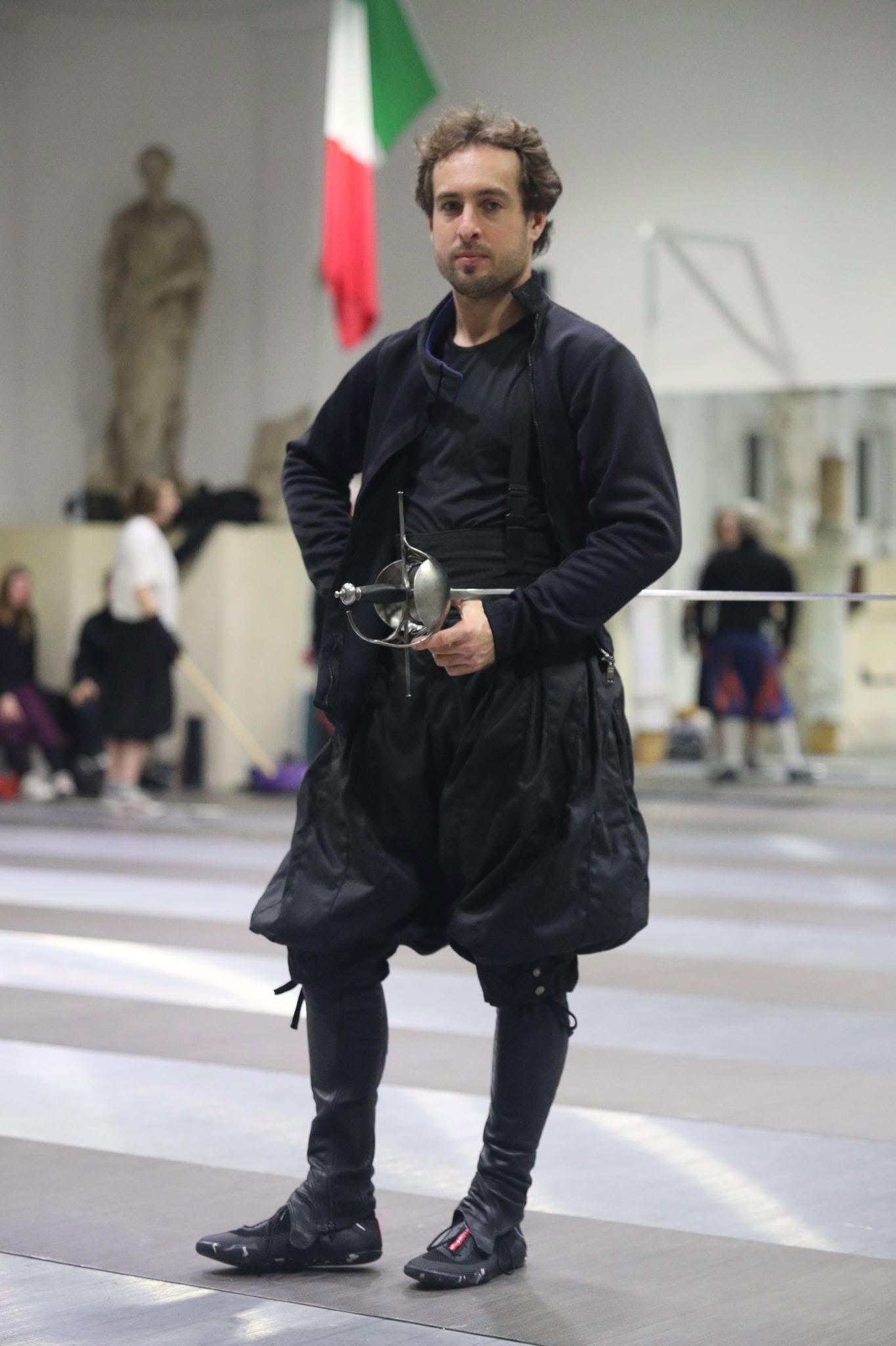
David Pascal ATHLETE AND TEACHER
I am a competitive fencer specializing in foil and a practitioner of HEMA (Historical European Martial Arts), with experience in the short sword and the cup-hilted rapier. I hold a Level 2 coaching certification from the Royal Spanish Fencing Federation (RFEE) and a Level 3 instructor certification in historical fencing from the A.S.I. of Italy. I currently teach classes at the Academia da Espada.
My work aims to combine the practical experience I have gained through my professional training with the study and analysis of historical fencing treatises. My goal is to understand how the combat systems of the ancient masters were actually conceived and executed, and to apply that knowledge to current practice within the HEMA community, transforming historical sources into useful tools applicable to our activity.
My interest in fencing—both as a sport and as a historical discipline—dates back to my early years of training. Since then, I have cultivated both disciplines in parallel, viewing them as two complementary aspects of the same art: Western fencing. Throughout my career, I have also had the opportunity to practice other martial arts, such as aikido and Tenshin Shōden Katori Shintō-ryū, which have enriched my training and my understanding of combat.
However, my primary focus and fascination have always been tied to the European traditions of fencing and the technical and martial legacy of those who practiced it.
Historical Fencing
Historical European Martial Arts (HEMA) is a modern martial discipline with cultural and sporting purposes that studies, reconstructs, and practices the weapon-based combat systems developed in Europe throughout history, using preserved treatises and historical sources as its primary reference. It is not a tradition passed down from generation to generation, as is the case in Asia, but rather a humble attempt to recover a small piece of our martial past.
Its goal is to recover and understand the techniques, tactics, and principles of combat used by the ancient masters of arms, translating them into a modern practice that combines historical rigor, technical development, physical conditioning, and martial application through training and controlled practice.
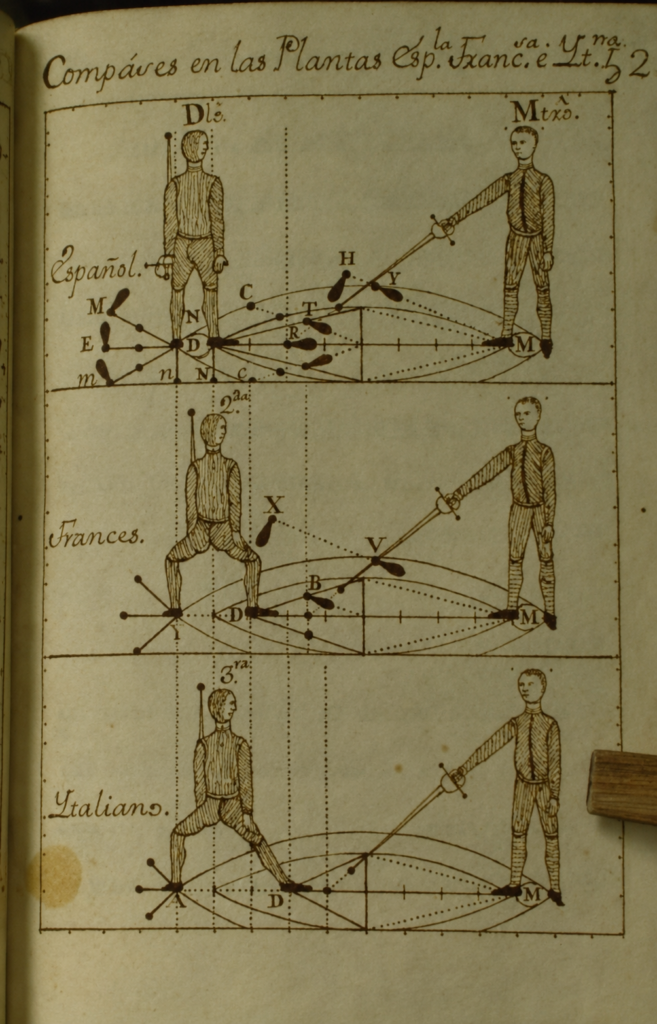
Tratado de esgrima del maestro Rodriguez del Canto 1714-1725
Sport Fencing
Competitive fencing is a combat sport that pits two fencers—armed with a foil, épée, or saber—against one another, combining technique, tactics, speed, and precision to outmaneuver the opponent while adhering to the conventions and rules of each weapon. It is the sporting successor to a part of our rich European martial heritage. And although it has become somewhat artificial from a martial arts perspective, it retains great intrinsic value.
Its goal is to develop the fencer’s physical, technical, and strategic abilities, teaching them to manage distance, timing, and initiative to outmaneuver their opponent in a contest based on skill, reflexes, and tactical intelligence. Today, it is an Olympic sport.